
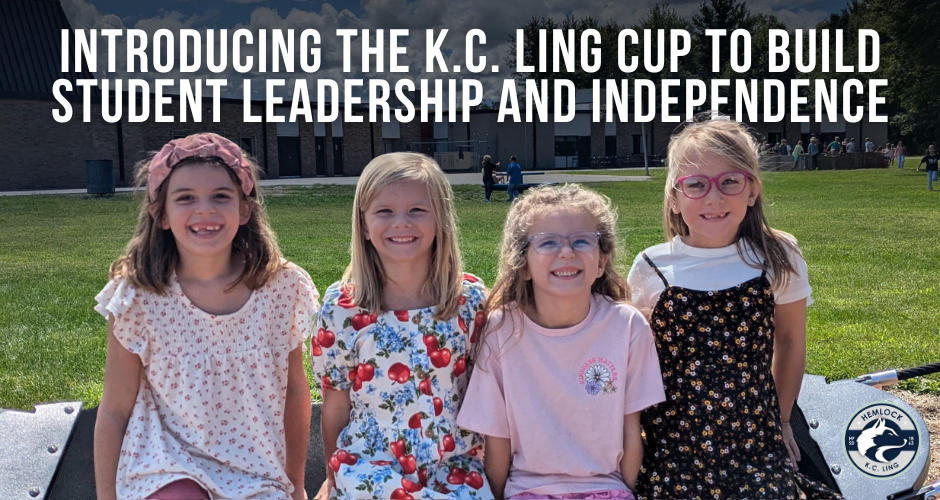
K.C. Ling Elementary School has launched a new yearlong initiative designed to strengthen school culture, recognize positive student behavior, and help students develop the independence and leadership skills they will carry with them throughout their education.
The K.C. Ling Cup is a friendly, grade-level competition for students in grades 1-4 that encourages students to make positive choices while working together toward a common goal.
At the heart of the initiative are four schoolwide expectations known as P.A.W.S.: Practice Safety, Act Responsibly, Work Together, and Show Respect.
Throughout the school year, students have opportunities to earn points for their grade level when they demonstrate these expectations. Staff members recognize students through the school's existing P.A.W.S. Pass system, with those positive recognitions contributing to each grade level's K.C. Ling Cup total.
"The K.C. Ling Cup is about much more than which grade finishes with the most points," said Cory Snider, Principal of K.C. Ling Elementary. "We want to create a school where students understand that their choices matter. As our students get older, we want them to move from doing the right thing because an adult tells them to, to doing the right thing because they understand why it matters."
Preparing Students for Greater Independence
While the friendly competition creates excitement for students, the larger purpose of the K.C. Ling Cup is connected to a much bigger goal: student independence.
As students progress through elementary school, they are expected to take on greater responsibility for their learning, their behavior, and their relationships with others.
The K.C. Ling Cup gives students repeated opportunities to practice those skills in real situations.
Students are learning that their choices have consequences. Their actions affect other people. They are capable of making good decisions. They can be responsible without constant adult reminders.
These are skills that extend well beyond elementary school.
"Our responsibility as educators is not simply to tell students what to do," Snider said. "It is to teach them how to make good decisions independently and give them opportunities to practice. We want our students to leave K.C. Ling knowing how to take responsibility, work with others, solve problems, and make positive choices even when an adult isn't standing right next to them."